
California CHP Arrest Records
The California Highway Patrol patrols the whole state. It does not serve as one central arrest-record custodian. Field work flows through eight divisions: Northern, Valley, Golden Gate, Central, Southern, Border, Coastal, and Inland. Below those sit Area Offices, Commercial Vehicle Enforcement Facilities, and communications centers. That structure explains a common quirk. An arrest release may come from a local Area. Another office entirely may handle your records request.
CHP's own division map lays out the field organization. The agency's field description lists 103 Area Offices. It also names 17 Commercial Vehicle Enforcement Facilities and six Communications Centers. Counts shift over time. The live map is the way to pin down which Area covers an event.
Arrests by CHP grow out of traffic enforcement, DUI operations, fugitive work, and crime suppression. One event can leave several trails. These include an arrest-information record, an incident record, a booking entry, and eventually a court case. Different agencies hold different pieces. Each record answers a different question about the arrest.
Where California CHP Arrest News Appears
CHP spreads its public information across a few channels, and they are not the same thing. A press release shares selected details. The live traffic page tracks road incidents. Social accounts post alerts and local news. None of them gives a full list of people arrested or booked across California.
| Official source | Useful for | Important limit |
|---|---|---|
| CHP News & Alerts news list | Selected releases about enforcement actions, arrests, operations, and public safety. | Not a complete arrest or booking search. |
| Traffic Incident Information Page | Current traffic incident activity by Communications Center. | An incident entry does not establish an arrest or custody. |
| CHP Alerts and local CHP accounts | Urgent notices and selected division or Area updates. | Not a statewide arrest archive; photo posts face legal limits. |
The official newsroom is the right first stop. It publishes any CHP announcement. Treat it as a publication stream, though, not a name-search tool. A release might spotlight an operation, a public-safety concern, or a result. The agency picks what to share. It may leave out people. Some contacted or arrested during the event may go unnamed.
The CHP newsroom and release page is the agency's current entry point for official news.
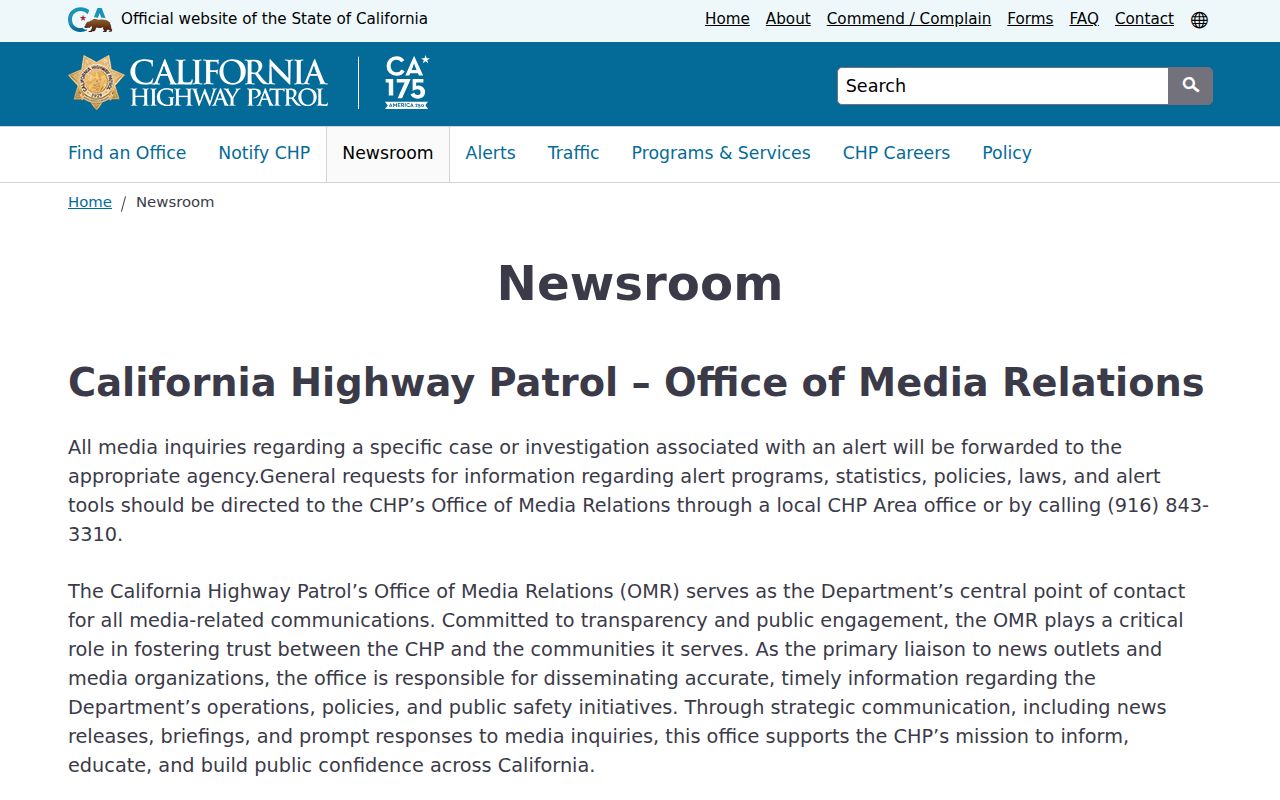
Open the release and pull out its date, place, division, and operation. Check what any arrest total actually counts.
Note: A newsroom release is a selected public account, so an absent name or event is not proof that no arrest occurred.
California CHP Enforcement Arrest Releases
A CHP release can carry real enforcement detail while covering only one defined event. A June 18, 2026 release describes a statewide DUI enforcement surge. It includes operation figures and a first-quarter snapshot. A February 14, 2024 release covers a crime-suppression operation in and around Oakland and Alameda County. Both are official examples of what the agency publishes. Neither is a statewide daily booking feed.
The DUI enforcement release and the Oakland-area operation release measure different events in different ways. Read the full item. Notice who took part. Notice where the work happened, and what the numbers count. A figure may cover arrests made during the operation alone. It may not count every CHP arrest in that place or period.
Use a release to identify an event, division, or date range for a follow-up request. It may not name each person booked. It may not show whether someone was cited, released, or transferred. Treat it as a lead. Then request the arrest record from the custodian.
Note: Operation totals describe the event and time span stated by CHP, not a complete daily booking count.
California CHP CAD Incident Activity
CHP's Traffic Incident Information Page is a separate public feed. Pick a Communications Center there. Then view current traffic incidents with details. The page covers roads and public safety. It does not track custody or daily bookings.
The CHP CAD selector shows the Communications Center choices for viewing live incident activity.
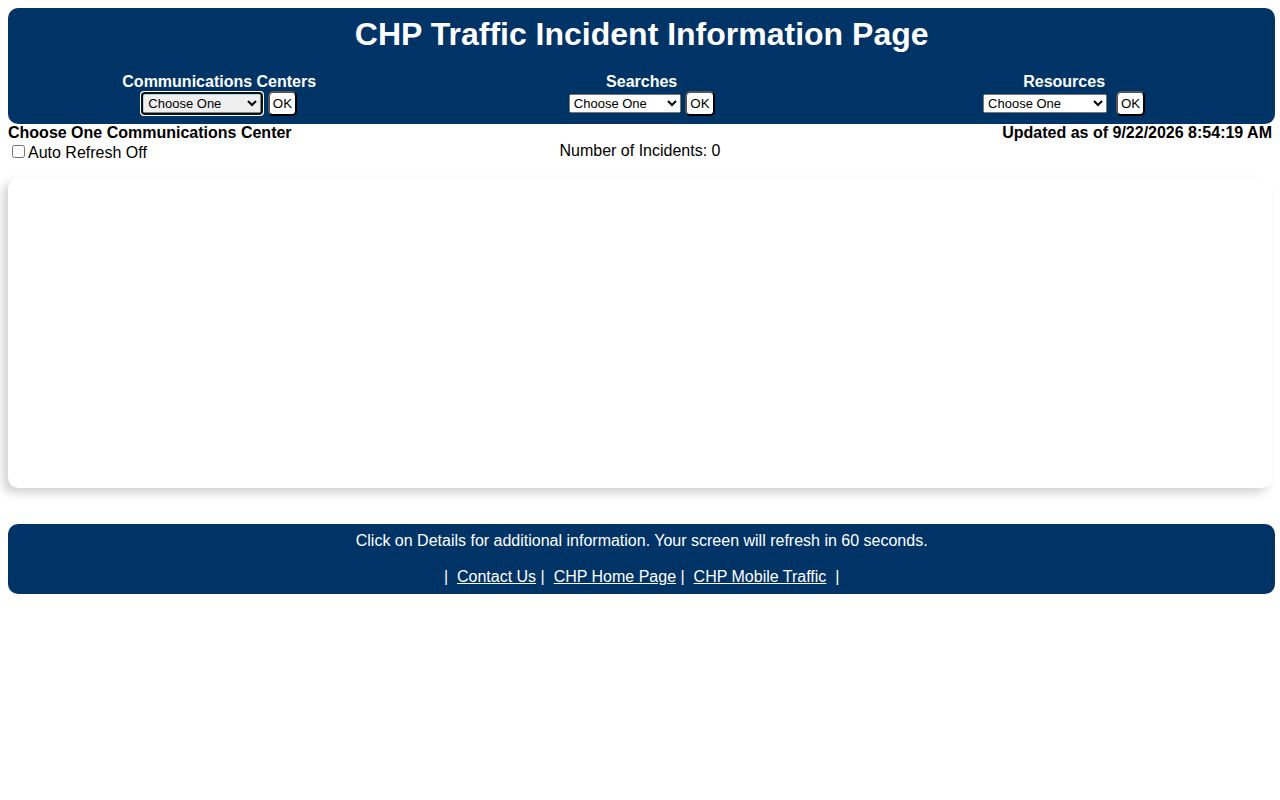
An incident entry might be a hazard, a collision, or a traffic stop. The entry alone does not confirm an arrest or a booking. It also says nothing about custody or court outcome. The visible window can close before you even search.
So divide the labor. Use CAD for live incident context, News & Alerts for selected announcements, and a county jail roster or records office for booking and custody. If CAD is your only clue, its place and time can narrow a later records request. It is still not the booking record.
Note: CAD incident activity may give event context, but it does not confirm arrest, booking, continued custody, or guilt.
California CHP Social Arrest News Limits
CHP's public face online is regional, not statewide. Its policy manual authorizes Facebook, X, and Instagram accounts for Areas and Divisions where applicable. The statewide @CHPAlerts account carries missing-person notices. Local public-information units may post their own enforcement updates. Together they are not a complete arrest archive. California also limits what police can post. Penal Code § 13665 restricts law-enforcement sharing of booking photos on social-media platforms for many arrests tied to nonviolent crimes. The law carves out exceptions, including some fugitive and public-safety situations. Removal rules may follow once an image is shared. The statute targets social platforms only. It does not ban every booking photo an agency holds or every structured record system that publishes one. The CHP social-media policy chapter lists official Area and Division accounts, and the current text of Penal Code § 13665 controls the booking-photo rule.
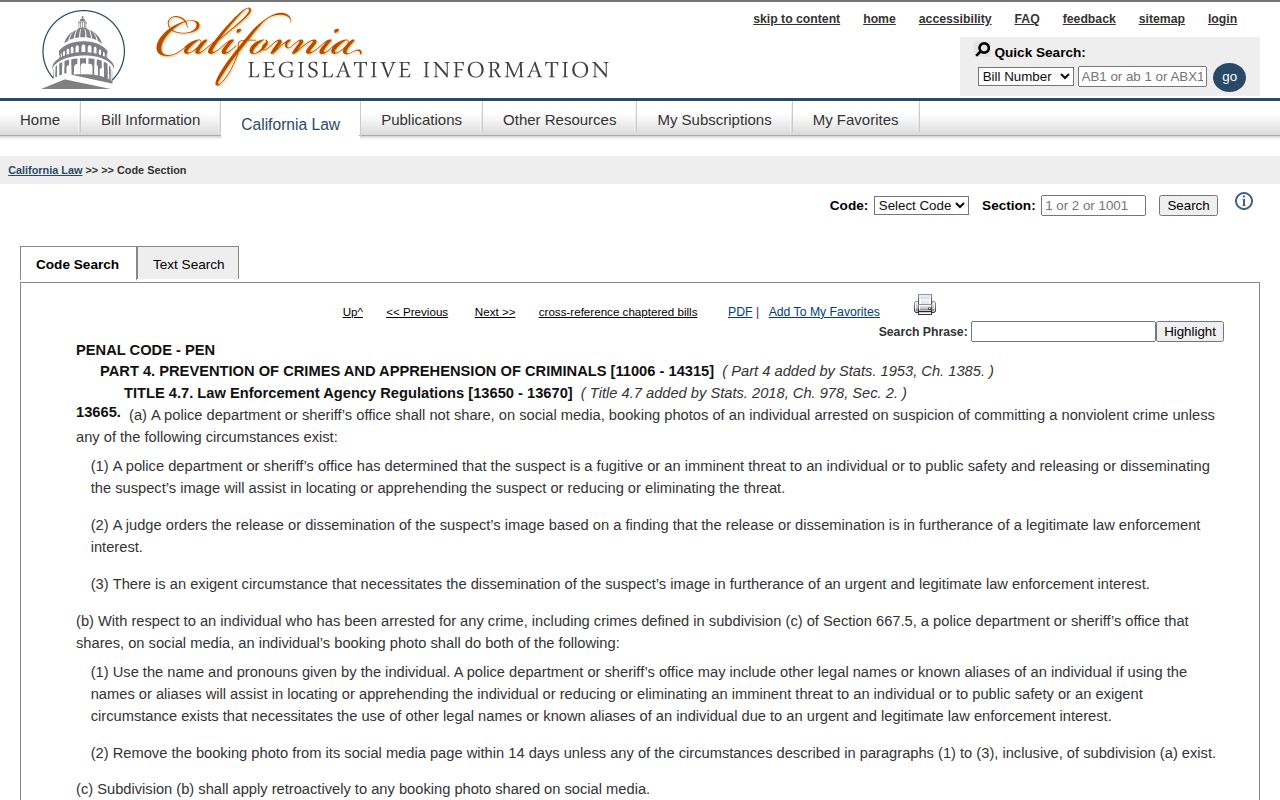
The rule targets social posts, not the arrest itself. No post is a full case record. When a social notice raises a custody question, the agency holding the person remains the source that matters.
Note: A social post is a notice from an agency account, not a complete arrest record or a court finding.
California CHP Arrest Records Requests
When public channels fall short, go formal. CHP records can be requested through the CHP Public Records Center or at any Area Office. The Area nearest the incident is preferred for routing. Any office will still take the request. A clear description helps staff find the right file and keeps an arrest-information request apart from a collision-report request. Details matter. Give the subject's name if known, the date or date range, the event location, and any incident number. State the record type and your contact information. Say whether you want arrest information, a report, booking detail, or something else. No incident number? Describe the event and the CHP Area or division as closely as the known facts allow.
- Open the CHP Public Records Act page and use the Public Records Center, or identify the relevant Area Office for a direct request.
- Describe the record, subject, date, location, incident number if known, and a reliable way to receive a reply.
- Ask separately for arrest information and any later booking record when both are needed; the arresting agency and receiving jail may hold different records.
- Review the response for released material, redactions, or a stated basis for withholding, then ask the records office about any unclear portion.
Timing starts once the request lands. The California Public Records Act generally gives an agency ten days to decide whether requested records will be disclosed. Unusual circumstances can extend that window. The ten-day clock is for the decision and the notice, not for delivering copies. The statutory determination period and the later work of locating, reviewing, redacting, and producing records are separate steps.
What comes back from an arrest request? CHP's HPM 11.1, Chapter 13 lists public fields: full name, physical description, arrest date and place, any subsequent booking, charges, factual circumstances, release information, and bail. Open fields do not mean open everything. Narratives and attachments may be withheld where disclosure could endanger an investigation or a person. A response can release only part of a record. Juvenile, victim, and protected database material carries its own limits.
Copy costs vary. They depend on the record, the format, and the current agency schedule. CHP policy discusses charges for certain copies. There is no universal statewide mugshot fee to quote. Confirm current costs with the Records Unit; direct duplication charges may apply. Collision reports are a different track. They follow separate eligibility and form rules, including the CHP 190, so their fees and process do not apply to arrest reports.
The HPM 11.1, Chapter 13 document details the public arrest-information fields and their limits, while the CHP Public Records Act page shows the request route and the initial response process. Use both before filing. The Records Unit confirms current fees and formats.
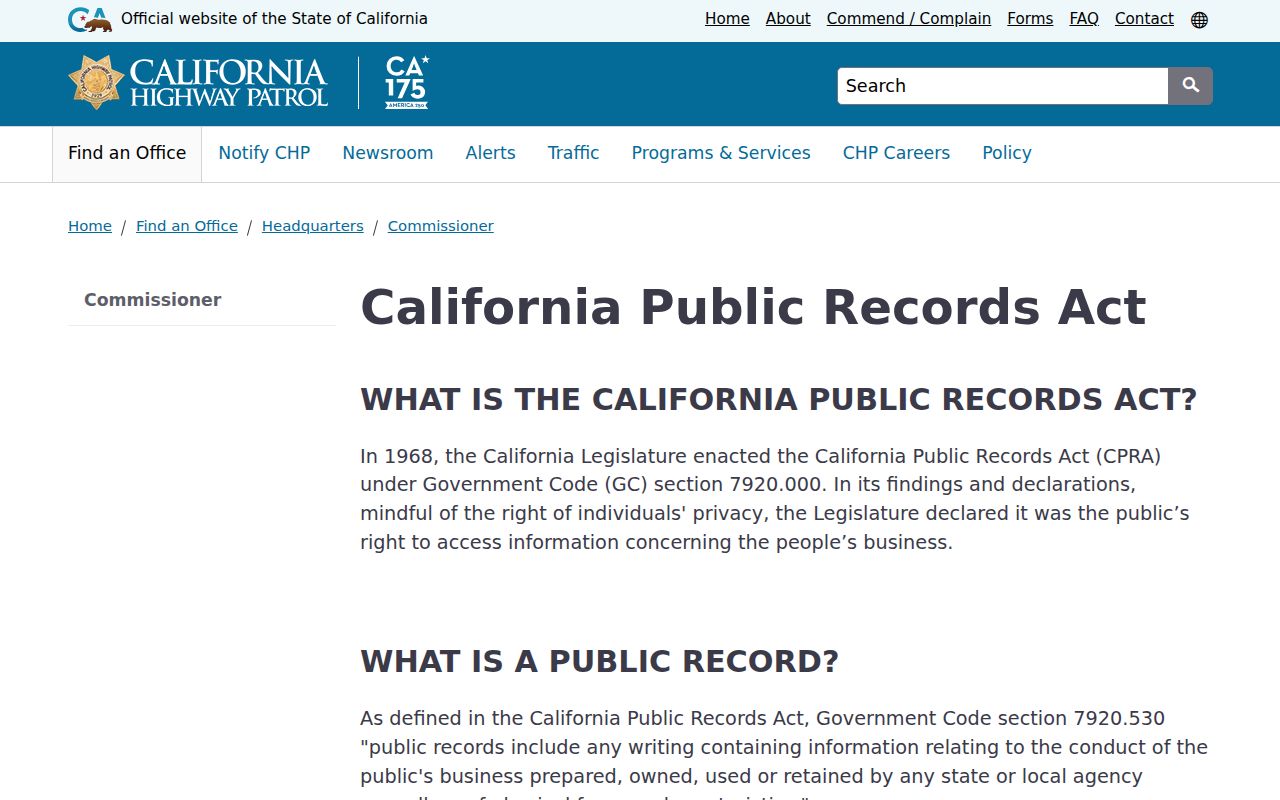
Specific dates, places, and incident details help the agency route a request to the right office. The ten-day notice stays a decision.
California CHP County Booking Route
CHP arrests people; it does not run jails statewide. Where a person goes next depends on several things. Location, the charge, the custody decision, and agency practice all shape the receiving arrangement. Many end up booked into a county jail. But a city facility, a county law-enforcement lockup, a temporary holding site, or another arrangement can apply instead. CHP's own guidance treats subsequent booking as conditional, so the county cannot be guessed from the arresting agency alone.
Start with the receiving county. That county's official custody roster or booking log is where the local intake record lives. A booking photo may appear there too. The custodian decides what the public can see. Keep timing in mind. Rosters tend to list people currently held, so a release or transfer can change what appears online. A name missing from one roster does not mean no arrest happened. When the online view leaves the question open, call the receiving agency's records office.
Two routes help most from there. The California County Directory points to the county-level source for the booking record. The statewide Arrested Today overview explains posting windows. They differ from county to county after a fresh booking. A CHP CAD entry can't substitute for either one. Someone who moves into state-prison custody is a different case. The CDCR CIRIS search covers that post-sentencing population, not county bookings.
Track a few details separately. Note the event date and location. Add the arresting Area, the receiving county, and the later booking status. One agency keeps the arrest record. Another holds the booking record, and a court handles the disposition. Think chain of related records. No single CHP file follows a case through every stage.
Why CHP Arrest News Differs from CAD
CHP puts out two public streams, and they answer different questions. Newsroom releases pick out enforcement stories to tell. CAD, meanwhile, shows live traffic activity organized by Communications Center. A release might tally arrest figures from a completed operation. A CAD road event may not tell you whether anyone was booked at all.
Neither stream works as a statewide booking roster. The newsroom never promises a searchable entry for every CHP arrest. CAD can't establish custody or a charge outcome either. Keeping the two straight prevents the common mistake of reading an incident display as a booking log, or a press release as a full arrest ledger.
So use each tool for its purpose. News & Alerts covers enforcement reporting. CAD adds incident context. The receiving county answers the custody and booking questions, and if things stay murky, request the right CHP or county record directly.